
Xenoticon: Eryxian Lifeform Compendium
Design & Discussion Draft v0.1
“The Xenotikon was compiled from ERYX Initiative field reports, Conclave pictographic records, three partial Ancient data logs, and the personal journals of researchers who did not return. It is considered incomplete. The planet considers all classification systems incomplete.”
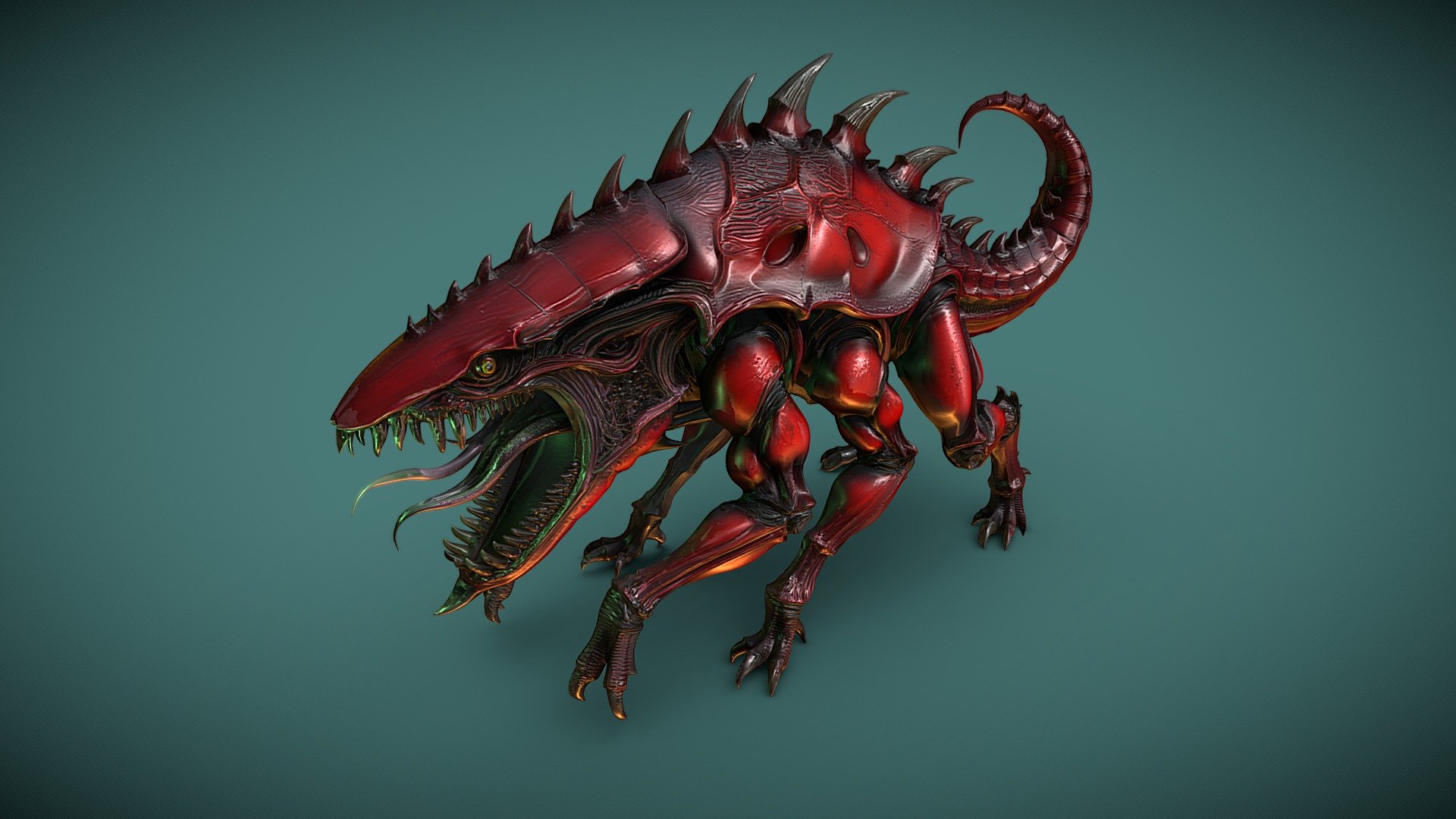
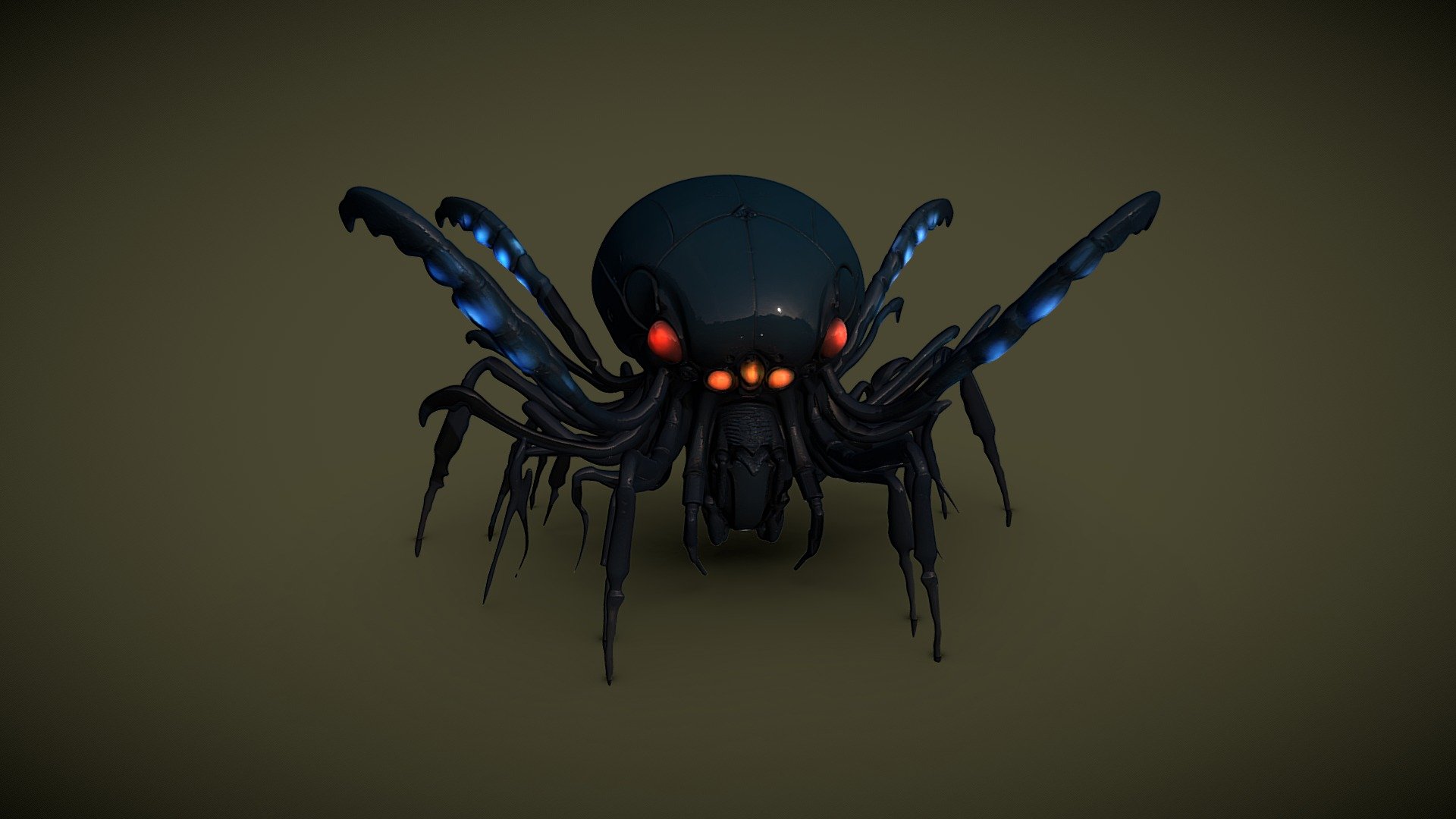
PART I: THE DESIGN
What the Xenotikon Is
The Xenotikon serves three simultaneous purposes, matching the ecosystem vision:
- Web page — World-building showcase for the Eryxian universe. Readable by anyone with no game knowledge.
- Rulebook section — GM reference for encounters, NPC stat blocks, and lifeform behaviour profiles.
- Forge App database — Structured data for encounter generation, campaign flags, and Metamorphosis triggers.
It is not a traditional bestiary. A traditional bestiary describes animals. The Xenotikon describes organisms that are also systems — creatures whose biology, life cycle, and relationship to the planet’s hyperevolutionary pressures define how they interact with players mechanically and narratively.
PART II: LIFEFORM CONSTRUCTION
The Six Classification Axes
Every Eryxian lifeform is described across six axes. These generate both the narrative entry (web/rulebook) and the mechanical stat block (TTRPG/TCG).
Axis 1 — BIOLOGICAL CLASS What kind of organism is this, in the broadest sense?
| Class | Description | Examples |
|---|---|---|
| Arthropoid | Exoskeletal, segmented, multi-limbed | Bloodfly, Scuttler, Arachnoctopus |
| Chordate | Internal skeleton or equivalent structure | Alpha Ripper, Nightfeeder, Stalker |
| Colonial | No individual organism — a collective unit | Swarm, Bloodfly (swarm state) |
| Cephalopoid | Tentacled, distributed intelligence | Arachnoctopus, Harbinger |
| Mycelial | Fungal, spore-based, distributed | Sporehead, Spawn |
| Labyrinthine | Organic-inorganic hybrid; partly constructed | Living Labyrinth, Octogoth |
| Planktonid | Microscopic colonial, acts as macro-organism | Swarm (dense state), biome layer organisms |
| Undefined | Classification resisted or actively evaded | Gastropoid, Nethermancer |
Axis 2 — ECOLOGICAL NICHE Where in the Eryxian food web does this organism sit?
| Niche | Role | Behaviour Profile |
|---|---|---|
| Apex | Top predator; territory-focused | Aggressive unless territorial boundary respected |
| Specialist Predator | Hunts specific prey; ignores others | Ignores players unless players are the prey type |
| Pack Hunter | Low individual threat; high group threat | Triggers when group threshold is crossed |
| Symbiont | Bonded to a host; extends host capabilities | Hostile only if host is threatened |
| Decomposer | Feeds on dead/abandoned matter | Attracted to defeated units; activates Metamorphosis triggers |
| Environmental | Not a predator; part of the landscape | No initiative; responds only to stimulus |
| Sentinel | Territory marker for larger organism or Labyrinth | Aggressive; triggers escalation if engaged |
Axis 3 — SCALE TIER Where in the five-tier scale does this organism operate?
All current TCG Eryxian creatures are Personal scale. Future entries will include Squad-scale colonial organisms, Vehicle-scale apex megafauna, and potentially Capital-scale entities connected to Labyrinth structures.
Axis 4 — LIFE CYCLE STAGE Eryxian lifeforms characteristically exhibit metamorphosis — often dramatic, often fast by terrestrial biological standards. Life cycle stages are separate entries in the Xenotikon, connected by explicit chain notation.
LIFE CYCLE NOTATION:
[Stage A] ─→ [Stage B] ─→ [Stage C]
              ↑
         (trigger condition)
Multiple stage forms may be active simultaneously in a population. The Spawner/Spawn Egg/Spawn chain is the most documented. Others are inferred from field evidence.
Axis 5 — TECH RELATIONSHIP How does this organism respond to technology — from the Conclave’s EMP-generating symbiotes to Collective machinery to Ancient artifacts?
| Relationship | Description | TTRPG Effect |
|---|---|---|
| Disrupts | Generates electromagnetic interference | Technology-dependent units: −1 die in Close zone |
| Ignores | No significant response | None |
| Attracted | Drawn toward energy signatures | Will approach active tech; may interfere |
| Appropriates | Metamorphosis candidate — incorporates tech into biology | Abandoned tech in zone: roll Metamorphosis table |
| Symbiotic | Has evolved with a specific technology class | Bonuses near that tech; penalties without it |
| Hostile | Actively attacks tech-carrying units | Prioritises tech-users as targets |
Axis 6 — ANCIENT CONNECTION Some Eryxian organisms exhibit behaviours consistent with Ancient design intent — whether as created organisms, shaped evolution, or remnant responses to Ancient systems still running.
| Connection Level | Description |
|---|---|
| None | No apparent Ancient connection |
| Vestigial | Exhibits Ancient-era behaviours; may respond to Ancient artifacts |
| Active | Demonstrably responds to active Ancient systems; possible design origin |
| Living Algorithm | May BE an Ancient system in biological form |
The Stat Block
Every Xenotikon entry has a dual format: narrative description for the web and rulebook, mechanical block for GM use.
╔══════════════════════════════════════════════════════╗
║  [NAME]                              [CLASS GLYPH]  ║
║  Biological Class · Ecological Niche · Scale        ║
╠══════════════════════════════════════════════════════╣
║  TCG:  Cost [X] | ATK [X] | HP [X]                 ║
║  TTRPG: ATK Pool [X]d6 | Defence [method] | DR [X]  ║
╠══════════════════════════════════════════════════════╣
║  KEYWORDS: [list]                                   ║
║  TTRPG TRANSLATIONS: [expanded rules text]          ║
╠══════════════════════════════════════════════════════╣
║  LIFE CYCLE: [Stage] → [Stage] (trigger: [event])  ║
║  TECH RELATIONSHIP: [type]                          ║
║  ANCIENT CONNECTION: [level]                        ║
╠══════════════════════════════════════════════════════╣
║  BEHAVIOUR PROFILE: [Aggressive/Defensive/etc]     ║
║  HABITAT: [theaters]                               ║
║  CONCLAVE RELATIONSHIP: [hunted/sacred/symbiont]   ║
╠══════════════════════════════════════════════════════╣
║  GM NOTES: [encounter design guidance]              ║
║  METAMORPHOSIS ELIGIBLE: [yes/no]                   ║
║  LOOT ON DEFEAT: [what the body yields]             ║
╚══════════════════════════════════════════════════════╝
PART III: CREATURE QACS
Philosophy
Character QACs are earned through play. Creature QACs work differently — they are inherent to the creature’s biology or acquired through the same Metamorphosis and Chaos Cycle pressures that shaped the creature’s species. They explain why a Hydra has Immunity or how the Nightsinger’s poison functions.
Creature QACs serve three roles:
- Narrative explanation — the lore reason for the mechanical keyword
- Encounter modifier — additional effects not captured by TCG keywords alone
- Loot seed — defeat the creature to potentially acquire a related item, sample, or Forge Card upgrade
Every creature has one inherent QAC (printed in the entry) and may acquire one environmental QAC (applied by GM based on where/how they’re encountered — a Nightfeeder in a Sargassum sector may have begun Metamorphosis).
Creature QAC Categories
BIOLOGICAL CONSTANT — This is what the organism fundamentally is. Cannot be removed or modified. Examples:
- Radiotrophic Metabolism — Gains +1 die on all rolls during Nyx Season (elevated radiation). Loot: Radiotrophic sample (Engineering component for crafting energy-based equipment).
- Distributed Neural Network — Cannot be Silenced. No single injury point — requires condition track damage to impair. Loot: Neural lattice fragment (Lore: Eryxian crafting component).
- Exoskeletal Moult Cycle — Once per scene, when Downed, may shed shell and return at Okay with −2 ATK permanently. Loot: Moult shell (natural armour crafting component; DR+1 on forged item).
ECOLOGICAL ADAPTATION — Shaped by the specific pressures of the creature’s habitat. May be replicated by extreme survival (certain QACs available to players through specific scenarios). Examples:
- Chaos Cycle Survivor — Immune to environmental condition damage. Narrative: this organism has survived at least one full cycle.
- Sargassum Drift — Can enter Orbital or Submerged theater without penalty. Narrative: evolved for protoplanetary disk environments.
- Labyrinth Attuned — Gains Stealth inside Underground theater. Ignores spatial distortion penalties.
SYMBIONT RELATIONSHIP — The organism is bonded to another organism or to the Conclave. Examples:
- Conclave Bond — Will not act against Conclave units unless the bond is actively broken. Breaking it is irreversible. Loot: Symbiont gland (Persuasion bonus when negotiating with Conclave).
- Pack Resonance — ATK pool increases by 1 die for each other member of the same species in the zone (Colonial creatures).
- Biome Anchor Organism — While alive, all Metamorphosis rolls in this zone have +2 to result.
ANOMALOUS — Origin unknown. Possible Ancient design. Possible Chaos Cycle mutation. Possible something else entirely. Examples:
- Variable Form — Stats are not fixed. Roll d6 at scene start for one attribute (as Gastropoid). Loot: Morphic tissue (Forge Card: +1 die to one attribute roll once per scene).
- Recursive Consciousness — Cannot be permanently killed. If Downed, reappears in the same zone 1d3 scenes later unless specific conditions are met (GM defines). Loot: Recursive cell cluster (rare; permanent).
- Silent Before It Strikes — First attack in any scene is always at Full Success regardless of roll. Cannot be telegraphed or anticipated. Loot: Sensory gland (Stealth upgrade for forged equipment).
PART IV: EXISTING CREATURES — PRELIMINARY ENTRIES
Life Cycle Chain 1: The Spawn Lineage
This is the most documented life cycle in the Xenotikon — three confirmed stages, each mechanically distinct.
SPAWNER Mycelial · Decomposer · Personal Scale TCG: Cost 2 | ATK 1 | HP 1
Small, fragile, and entirely focused on reproduction. The Spawner is not a threat — it is a warning. Its presence indicates a Spawn maturation cycle in progress. Conclave hunting parties treat the discovery of a Spawner colony as a significant scouting find.
Inherent QAC: Death Seeding — on defeat, does not die. Instead, produces a Spawn Egg that hatches in 3 rounds (or 3 scenes, in TTRPG). The Spawner’s body is the egg.
Life Cycle: Spawner → Spawn Egg (3 turns/scenes) → Spawn
SPAWN EGG Mycelial · Environmental · Personal Scale TCG: Cost 0 | ATK 0 | HP 3
Not an organism — a transitional state. The Spawn Egg appears passive and is often ignored. This is an error. It has a HP pool precisely because something is growing inside that has a biological interest in not being destroyed.
Inherent QAC: Incubation Defence — cannot be targeted by area effects (Scream, Orbital Strike). Must be individually attacked. If destroyed, no Spawn emerges but the body yields Morphic tissue.
Life Cycle: ← Spawner | → Spawn (after 3 rounds/scenes)
SPAWN Mycelial · Apex · Personal Scale TCG: Cost 6 | ATK 6 | HP 6
The mature form. What the Spawn actually is remains disputed between the ERYX Initiative’s field researchers and the Xenological Society — it appears to be a different organism class than the Spawner, suggesting the life cycle involves more than growth. The body plan changes entirely.
Inherent QAC: Metamorphosis Complete — Immune to Metamorphosis triggers. The Spawn has already become what the planet made it.
Life Cycle: ← Spawn Egg | [no further stage documented]
Life Cycle Chain 2: The Bloodfly Lineage
A two-stage predator chain with social structure.
BLOODFLY Arthropoid · Pack Hunter · Personal Scale TCG: Cost 2 | ATK 1 | HP 1
Individual Bloodflies are trivial. They know this. They do not hunt individually by preference — the single Bloodfly encountered near a settlement is an advance scout, not a threat profile. The threat arrives when the scout doesn’t return.
Inherent QAC: Swarm Signal — on defeat, all Bloodfly units in the zone gain +1 die on their next attack. The colony is informed.
Life Cycle: Bloodfly → Bloodfly Queen (trigger: colony loss/stress)
BLOODFLY QUEEN Arthropoid · Apex (colonial) · Personal Scale TCG: Cost 3 | ATK 2 | HP 2
The Queen is not larger than her colony members by much. She is different in kind — her biology generates the pheromone field that coordinates the swarm. Destroying the Queen does not end the swarm; it sends it into a disorganised frenzy that is arguably more dangerous for approximately two rounds.
Inherent QAC: Colonial Override — while the Queen is active, all Bloodfly units in the zone act on the Queen’s initiative (not their own). When the Queen is Downed, all Bloodflies in the zone act on Panic Oracle result 5 (Reckless) for 2 rounds before dispersing.
Life Cycle: ← Bloodfly colony (stress trigger) | [no further stage documented]
Notable Singles
HYDRA Chordate · Apex · Personal Scale TCG: Cost 7 | ATK 7 | HP 9
The largest documented land organism at Personal scale. The Hydra’s Immunity keyword is not a magical effect — it is biological. Its physiology regenerates faster than most damage mechanisms can sustain, and its distributed nervous system means conventional attacks that would incapacitate other organisms simply redirect load.
Inherent QAC: Distributed Nervous System — cannot be Silenced or have keywords removed. Condition track damage applies, but single-success hits do not cause condition steps (requires 2+ successes). Loot: Neural ganglion cluster (rare Lore: Eryxian component; unlocks Hydra summoning eligibility).
Behaviour Profile: Territorial but not aggressive outside territory. Conclave relationship: sacred; the Great Hunt includes but does not encourage Hydra hunting.
NIGHTSINGER Undefined · Specialist Predator · Personal Scale TCG: Cost 3 | ATK 2 | HP 5
Classified as Undefined because its biology doesn’t resolve cleanly into any other class. The Nightsinger appears to be a chordate, then exhibits mycelial reproduction behaviour, then demonstrates chemoreception ranges consistent with no known organism of its apparent size. ERYX Initiative researchers have filed seven different classification proposals. None have been accepted.
Inherent QAC: Reciprocal Venom — when the Nightsinger is damaged, the attacker must make a Physique TN 4 check or gain the Poisoned status (−1 die per round until Medicine TN 4 clears it). This is not a weapon — it is a passive biological response. Loot: Venom sac (Crafting: adds Poison keyword to any forged weapon).
GASTROPOID Undefined · Specialist Predator · Personal Scale TCG: Cost 4 | ATK 1 | HP variable (roll d6)
The Gastropoid’s variable HP is not a game abstraction. The organism is genuinely different sizes depending on its current stage of digestive expansion. A Gastropoid encountered immediately after feeding (HP 6) is a different practical threat than one encountered mid-hunt (HP 1–2).
Inherent QAC: Digestive State — at the start of each scene featuring a Gastropoid, roll 1d6. This is its current HP maximum. Its ATK also becomes the result ÷3 (rounded up). It is a different creature each encounter by biology, not by accident. Loot: Digestive enzyme sample (Medicine component; rare).
LIVING LABYRINTH Labyrinthine · Environmental · Personal Scale TCG: Cost 5 | ATK 6 | HP 4
The question of whether the Living Labyrinth is an organism or a structure fragment that has become an organism after sufficient time in the Eryxian ecosystem is not resolved. The ERYX Initiative classifies it as a structure. The Conclave classifies it as an elder. Both may be correct.
Inherent QAC: Structural Stealth — at the end of any round where at least one allied Eryxian unit is present in the same zone, the Living Labyrinth enters Stealth automatically (costs nothing). It does not choose to hide. Its biology makes it architecturally invisible to most sensor systems when it is not the only object present.
Ancient Connection: Active — responds to Ancient signals. May be navigable if approached with Lore: Architect skill.
NETHERMANCER Undefined · Sentinel · Personal Scale TCG: Cost 4 | ATK 2 | HP 4
Field researchers disagree on whether the Nethermancer is a biological organism or a partially biological Ancient system. It does not feed. It does not reproduce (no documented case). It appears, silences nearby technology in ways that go beyond standard Conclave EMP, and disappears. There are seventeen documented field encounters. Seventeen researchers returned. Twelve remember it the same way.
Inherent QAC: Selective Silence — the Nethermancer’s Silence ability (TCG) functions in TTRPG as: target unit loses all card-derived keywords and cannot play cards for 2 rounds. This includes Equipment cards already attached. The Nethermancer does not fight — it unmakes the advantages that technology represents. Loot: None recoverable. Attempting to take samples results in samples vanishing before session end.
Ancient Connection: Living Algorithm — may be an Ancient system in biological form.
STALKER Chordate · Specialist Predator · Personal Scale TCG: Cost 3 | ATK 4 | HP 2
Fast, fragile, and hunting something specific. The Stalker does not hunt at random — field evidence consistently shows it pursuing a single target type across multiple scenes, ignoring other potential prey. What determines the target type is not understood. Conclave hunters call this behaviour the chosen path and consider it an honour to be selected.
Inherent QAC: Designated Prey — at scene start, roll 1d6 or GM assigns: the Stalker has selected one specific PC or unit as its target. It will not attack any other target this scene unless that target is defeated. On Partial success attack against its target, it takes no counter-damage (too fast). Loot: Scent gland (Stealth component; adds +1 die to Stealth rolls when tracking a specific target).
SCREAMER Chordate · Environmental / Apex hybrid · Personal Scale TCG: Cost 5 | ATK 6 | HP 4
The Screamer’s area effect (Scream: Damage all by 1) is acoustic — a targeted biological weapon that the Conclave call the planet’s warning. Screamers rarely initiate conflict. When they do scream, it is because something has already gone badly wrong in the zone and they are announcing it.
Inherent QAC: Distress Signal — when the Screamer uses its Scream ability, all Eryxian faction units in Far range make a free move toward the Screamer’s zone (they are responding). GM should treat this as optional escalation — a Screamer combat can become considerably more complicated one round after the Scream.
OCTOGOTH Labyrinthine · Undefined · Personal Scale — Ancient-aligned TCG: Cost 4 | ATK 3 | HP 3
The Octogoth’s variable attack (roll d6 on attack, 4+ = +6 ATK) has no documented biological explanation. ERYX researchers classify it as an Ancient organism — designed rather than evolved. Its body plan does not match any Eryxian evolutionary lineage. It appears in locations with confirmed Ancient presence. It does not respond to Conclave communication protocols.
Inherent QAC: Probabilistic Strike — the Octogoth’s anatomy includes what appears to be a probability-manipulation organ, possibly Ancient in origin. Its attacks are not random — they are the organism calculating optimal strike timing and occasionally being correct in ways that exceed its apparent physical capability. Loot: Probability organ (Forge Card: once per session, re-roll one failed roll — the organ carries an echo of the ability).
Ancient Connection: Active — created or shaped by Ancient design.
PART V: LIFEFORM DESIGN FRAMEWORK FOR GMs
Creating New Eryxian Organisms
The Xenotikon is not exhaustive. The Chaos Cycle ensures it never can be. GMs creating new organisms for custom Chronicles should follow this framework:
Step 1: Choose a Biological Class and Ecological Niche The combination determines default behaviour. An Arthropoid Apex behaves differently from a Colonial Decomposer even before any QAC is applied.
Step 2: Assign a Life Cycle Even if only one stage is used in the Chronicle, knowing where the creature sits in its cycle shapes how it behaves. A juvenile apex predator is aggressive because it hasn’t established territory yet. A post-metamorphosis specimen may be disoriented and more dangerous.
Step 3: Select or Create an Inherent QAC One biological constant. It should explain something about the creature’s TCG keyword, or give the creature a TTRPG effect not captured by its basic stat block. Keep it to one sentence of effect.
Step 4: Assign a Tech Relationship This determines how the creature responds to player equipment, Collective units, and TAM technology. It also determines whether the creature is a Metamorphosis candidate.
Step 5: Set the Loot Profile What does the creature yield on defeat? Components should connect to crafting — a venom sac becomes a Forge Card upgrade for a weapon, a neural lattice becomes a Lore: Eryxian study subject worth XP, a shell segment becomes an armour component. Loot should always have a use, never be purely monetary.
Step 6: Note the Conclave Relationship Every Eryxian organism has a relationship with the Conclave: hunted, protected, symbiotic, sacred, or feared. This determines what happens socially if the party kills it in Conclave territory.
Design Principles
Creatures are systems, not obstacles. An Eryxian organism exists within the ecosystem before the players arrive and continues after they leave (unless they changed something). Design each creature as if it has a reason to be in the location that has nothing to do with the party.
The life cycle is the encounter design. A creature in a late life cycle stage has different threat parameters than one in an early stage. A Spawner colony is a puzzle. A Spawn is a reckoning. Design encounters knowing which stage is active and what triggered it.
Loot is narrative information. A venom sac is a crafting component, but it’s also evidence: this creature was venomous, and something about that venom was worth synthesising. Loot should tell the story of what the creature was.
The Conclave knows things you don’t. If a creature exists in the Xenotikon, the Conclave has a name for it, a ritual relationship with it, and information the party doesn’t have. Conclave contact is the in-world route to advanced creature knowledge. Design the Conclave relationship before the stat block.
Xenotikon Design Framework v0.1 — Eryxian Universe — Daniel Sandner
“Classification is a human impulse. The planet files nothing.”