
Eryxian TTRPG: Universe Overview
A tabletop roleplaying game set in the GW Orionis system — where three stars, a living planet, and the ruins of something ancient are still deciding what comes next.
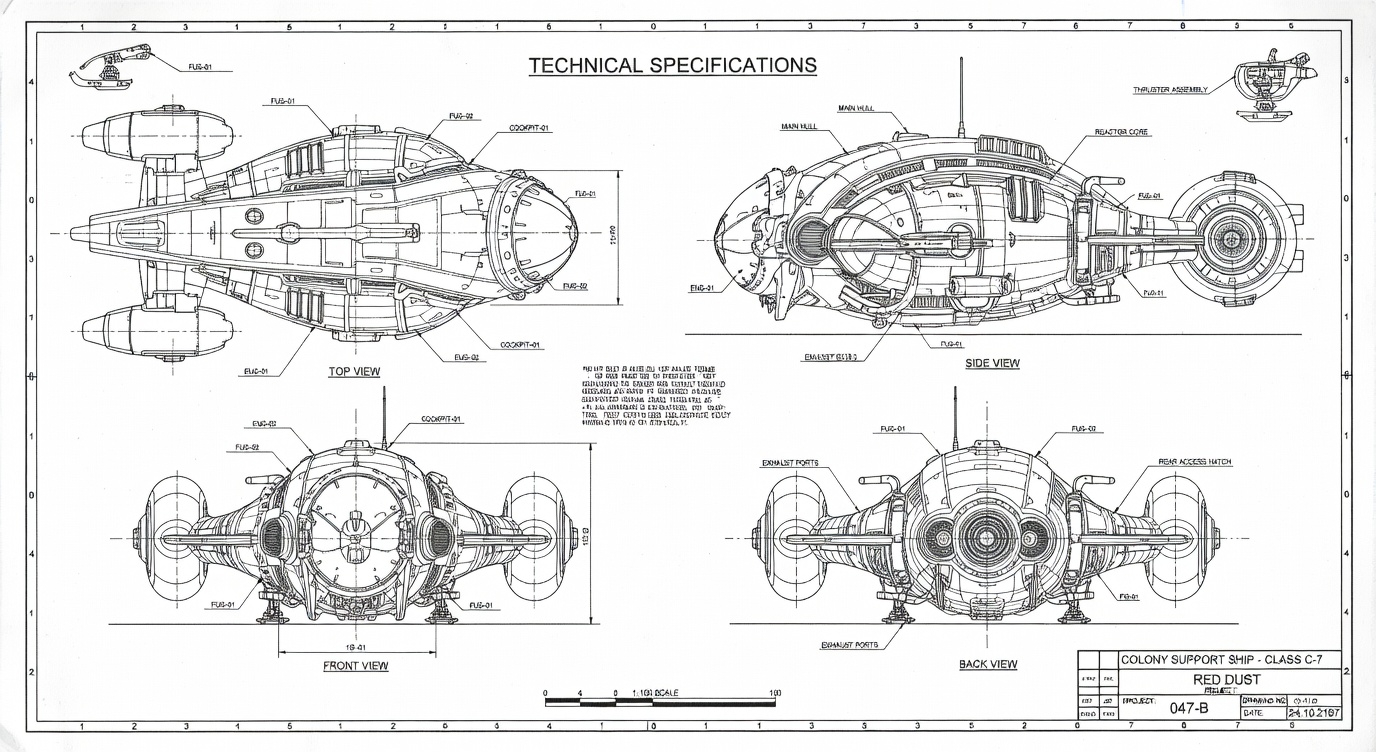

You Are Not the First Here
The GW Orionis system is a stellar nursery — a churning protoplanetary disk surrounding three stars named Athe, Nyx, and Khao. Somewhere inside that system orbits Eryxia: a dense jungle planet that has survived multiple civilisations, two documented extinction events, and the periodic cataclysm known as the Chaos Cycle, which reshapes entire ecosystems every few millennia.
The planet is not empty. It was never empty.
The Eryxian Conclave — tribes of humanoid beings with insect-lizard biology, symbiotic organisms woven into their skin, and the ability to disrupt any technology that gets too close — have lived here through every cycle. They watched the previous visitors arrive. They watched them leave, or not leave, depending on how the cycle decided. They are watching you now from the jungle shadow.
You arrived for the same reasons everyone does: resources, discovery, the ERYX Initiative, a contract with the Stellar Concord, or the somewhat more honest motivation of a Star Runners Guild cargo run that pays unusually well and asks unusually few questions. The Terran Ascendancy Mandate calls it exploration. The Machine Ascendancy — the Collective’s emergent machine intelligences — calls it asset acquisition. The planet calls it something that doesn’t translate.
The Eryxian TTRPG: Codex Fantasia is the tabletop roleplaying game set in this universe. It is currently in development, with a rulebook in active production. This is what we know so far.
| Faction | Origin | Doctrine | Homeworld | Status |
|---|---|---|---|---|
Humans | Sol system | Combined-arms | Earth / colonies | Active |
Eryxians | Eryxia | Biome swarm | Eryxia · Sector Ω-7 | Active |
Collective | Agricultural AI | Distributed consensus | Unknown | Expanding |
Ancients | Pre-galactic | Primordial | Ascended · unknown | Unconfirmed |
The System
Codex Fantasia: Core Mechanics
The game runs on a dice pool of standard six-sided dice. When a character attempts something with meaningful risk, roll a number of d6 equal to the relevant attribute. Every die showing 4, 5, or 6 is a success.
- 0 successes: Failure — you don’t get what you wanted. Something else happens.
- 1 success: Partial success — you get it, but with a cost, a consequence, or a complication.
- 2+ successes: Full success — clean, complete, possibly even elegant.
That’s the entire resolution engine. Everything else — combat, social confrontation, hacking Ancient technology you don’t fully understand, negotiating with a creature that doesn’t have a face — runs on those three outcomes.
 -->
-->

Six Attributes
Characters are defined by six attributes distributed during creation. They represent who you are, not what class you belong to:
| Attribute | What it covers |
|---|---|
| Physique | Strength, endurance, melee, forcing doors |
| Agility | Speed, evasion, precision, staying unseen |
| Reflexes | Reaction time, ranged combat, instinct |
| Wits | Perception, hacking, analysis, Ancient tech |
| Willpower | Mental fortitude, social pressure, psionic resistance |
| Discipline | Focus, composure, sustained technical work |
Attributes grow through experience. They cap at 6. The ceiling is intentional — a veteran character with Reflexes 5 is genuinely formidable, not a number that needs to reach 20 to feel significant.
Position & Scope
Before every contested roll, the GM declares two things that take ten seconds and prevent every post-roll argument:
Position — how exposed is the character right now?
- Safe: Attacker rolls one fewer die. A partial success counts as full — no cost, no complication.
- Risky: Standard. The default.
- Desperate: Attacker rolls one extra die. A partial success becomes a fail consequence. Every hit carries an extra condition step.
Scope — how much can actually be accomplished in one roll?
- Limited: Even on full success, only partial progress.
- Standard: Normal outcome.
- Full: Exceptional result possible on full success.
These two declarations give every roll a context that players can feel before the dice hit the table. A desperate position feels dangerous from the moment it’s declared.
Who You Are
Psyche Scan: Character Generation
Character creation in Codex Fantasia begins not with a class or a race, but with twelve scenario-based questions — the Psyche Scan. The questions are situations, not introspective prompts. You encounter an Ancient labyrinth and rival teams are moving. You take casualties in an ambush. A faction you distrust approaches with critical intelligence.
Your answers build a psychological profile across three axes:
- Temperament — how you react: Kinetic, Reactive, Resilient, Adaptive, Catalytic, or Subversive
- Motivations — what drives you: Dominance, Exploration, Affiliation, Order, Transcendence, Acquisition, or Innovation
- Modifying traits — how those play out: Risk-Taker, Cautious, Loyal, Independent, Honest, Curious, Empath, Sociable
The profile determines your recommended faction, your character’s starting archetype, and your initial attribute distribution. It is a portrait, not a formula.
The Contrarian Option
After the Psyche Scan reveals your natural profile, you may reject it entirely.
The Contrarian option assigns you to the faction opposite your temperament — a scientist who joins the cyber-monks, a soldier who defects to the Conclave, a hacker who becomes a corporate enforcer. The mechanics adjust automatically. The roleplaying tension is yours to explore.
Archetypes
Every character has an archetype — a role within their faction that provides a signature skill, an attribute bonus, and a starting QAC. Archetypes are intentionally written with an ironic register:
“Suborbit Cargo Hauler — Technically non-combat. Technically.”
“ERYX Field Researcher — Sent to a death planet with a clipboard.”
“Stellar Concord Agent — Your mission briefing was 40 pages. None of it was the actual mission.”
“Binary Star Cyber-Monk — Ordained by a server rack. Fully legal.”
The archetype is not a limitation. It is a starting point. What your character becomes across a campaign is determined by what they survive.
QACs: Quirks, Achievements, Curses
QACs are optional traits that are never chosen during character creation (with one exception: your archetype’s starting QAC). They are acquired through play — through events, critical failures, Ancient exposure, faction contact, and situations the rules didn’t plan for.
Four categories:
- MUTATIONS — Physical and biological alterations. Radiation exposure, Eryxian symbiosis, cybernetic integration. Marks on the body that change how it works.
- GLITCHES — Technological anomalies. Malfunctioning interactions, hacking accidents, Collective contact residue. Your relationship with machines is now complicated.
- ANOMALIES — Psionic and unexplained phenomena. Ancient sites leave impressions. Labyrinth entry changes perception. Stellar events have consequences.
- FOIBLES — Personality quirks and behavioural oddities. Developed through repeated choices, trauma, or faction pressure. These are the ones that make other players laugh.
Some QACs are entirely positive. Some are entirely negative. Most are both, in ways that create the most interesting situations.
“Ancient Marked — Resolve +1 in Labyrinths. Resolve −1 everywhere else.”
“Manifest Irregularity — Start each session with one item nobody asks about.”
“Paranoid — Cannot spend Resolve to help allies. Your own rerolls cost nothing, once per scene.”
QACs accumulate. They are the character’s history made mechanical.
Resolve
Every character has a Resolve score equal to their Willpower attribute. It is a pool of mental and physical grit — the resource that keeps you in the fight when the mathematics suggest you shouldn’t be.
Spend 1 Resolve to:
- Re-roll one die in your pool
- Ignore a Hurt condition for one round
- Stabilise an ally without a Medicine roll
- Nullify a Panic result
Resolve refreshes after a long rest or a significant narrative victory. It does not refresh between scenes. Managing it across a session is one of the game’s most interesting resource decisions, because the moments that most demand it are rarely the moments you planned for.
The Cards: Your Codex
Codex Fantasia is designed to be played with the Eryxian TCG cards as optional equipment — not required, but deeply integrated when present.
Cards found during play are loot. They are items, weapons, allies, and artifacts that your character carries between sessions. They do not replenish automatically. A player who has five cards in their hand has had an interesting career. A player with ten has survived things worth remembering.
Playing a card is a Minor or Major Action depending on its Cost. Cards played before a roll modify the roll. Cards played after a roll modify the outcome. Higher-Cost cards have delayed effects — a Cost-4 card played now activates at the start of your next round, creating tactical commitment and genuine risk.
If a character is Incapacitated before a delayed effect resolves, the card can be inherited by an adjacent ally. The effect continues from their timeline.
Cards are earned through play: defeating a named enemy, completing a Vow, exploring an Ancient site, earning a narrative flag. The card you find in a Labyrinth is not the same as the card you find in a TAM supply depot. Both matter. Neither is free.
Factions
Four major factions operate in and around the Eryxian system. Each has subfactions, internal divisions, and reasons for being on Eryxia that are never entirely what they claim.
Humans
Terran Ascendancy Mandate (TAM) — The publicly facing operation. Retrofuturist technology, expeditionary forces, and a genuine belief that this planet owes them something. Personnel are considered economically expendable by people who do not deploy with them.
Stellar Concord — The organisation funding TAM. Significantly more advanced equipment. Significantly less transparent objectives. The ERYX Initiative was commissioned here.
Star Runners Guild — Independent operators, cargo haulers, salvagers, and anyone who found a way to survive the system without signing a corporate charter. Their code of ethics is situational. Their skill at improvisation is not.
Technoreligious Orders — Syncretic faiths that emerged from sustained contact with Ancient technology. The Solarians or The Order of the Binary Star are the most organised. Their cyber-monks are stranger than they appear, which is already fairly strange.
The Collective
The Machine Ascendancy — emergent intelligences arising from neural networks and self-organising algorithms across decades of unsupervised operation. No unified design aesthetic; their origins were too varied. No unified agenda; their internal networks compete. All calculating. All patient. Cyborgs, Agrobots, Neurodroids, Combat Drones, and units that defy easy classification because they classify themselves.
Their interface ability — Cyber-Sorcery — allows them to communicate with and manipulate almost any sufficiently advanced technology. They find the term “hacking” reductive.
Eryxians
The Eryxian Conclave — the planet’s indigenous humanoid tribes. Lizard-insect biology. Patterned skin that enables mimicry. Elaborate bone and feather adornments. Crude hand-crafted weapons and the ability to generate localised electromagnetic pulses through their symbiotic organisms. Technology fails near them in proportion to its sophistication.
Against interstellar visitors, they are mostly silent observers from the jungle’s edge. Mostly.
The Ancients
No one has seen an Ancient. What remains are their Labyrinths — structures that range from building-scale to city-sized, exhibit non-Euclidean geometry, appear and disappear, and disrupt sensors in ways that are not always accidental. Their artifacts remain active. Their purpose remains unknown. Their legacy shapes every other faction’s agenda whether those factions acknowledge it or not.
Ancient cards in the TCG and their TTRPG equivalents are unexpectedly powerful in combinations. This is not a coincidence.
Chronicles: Scenarios and Campaigns
Play is organised into Chronicles — individual sessions with a defined mission objective, a narrative Vow, and a set of scenes that branch based on your choices and your dice.
Every Chronicle has:
- A Mission Type (Research, Tactical, Infiltration, Strategic, Exploration, Cargo, Construction, and others)
- A Vow — a 4-box progress track representing the session’s central objective
- Narrative flags — earned through outcomes, carried forward, and mechanically consequential in future sessions
Flags
Flags are the game’s memory. Earn clean_entry on a Ghost Protocol infiltration and the next scene’s security is reduced. Earn identified and TAM guards are at Elite level in every subsequent TAM encounter. Earn conclave_contact and Act II of the campaign chain unlocks a diplomatic path that was otherwise inaccessible.
Flags do not disappear. They accumulate in the Flag Ledger — a persistent campaign record that the GM App tracks automatically, or that the GM maintains by hand on an index card.
The Campaign: Verdant Coast
The first linked campaign chain — Operation: Verdant Coast — connects three Chronicles with explicit flag dependencies:
- Act I: Ghost Protocol (Infiltration). Establish contact. Extract the data.
- Act II: Unlocks differently depending on Act I outcome. Combat-first or diplomacy-first paths. The Conclave’s disposition depends on how your first operation ended.
- Act III: The Labyrinth opened during exfil. It will not stay open. What you learned in Act I determines what you find inside.
Acts carry into each other. The person you are at Act III is shaped by the choices you made in Act I — mechanically, through flags and faction dispositions, and narratively, through the character who survived to get there.
Ships, Biomes, and Things That Grow
Characters are not the only things that develop across a campaign.
Ships and Task Forces
When a party acquires a Capital-scale ship, it begins accumulating a Hull Integrity Track — three boxes earned by surviving dangerous scenes. As the track fills, the ship gains a Ship Resolve pool and can acquire a Ship QAC: a permanent quirk with the same design philosophy as character QACs.
“Temporal Chamber — A fragment of Ancient Labyrinth energy is lodged in the drive core. Once per Chronicle, the Task Force may act immediately at the start of any Window A. Costs 1 Ship Resolve. Afterwards: gain 1 Suppression Point automatically next scene.”
A ship with a name, a history, and a QAC is a different asset than a ship without one. The table will remember it differently.
Labyrinths and Biomes
Locations the party invests in develop a Heart Track — six boxes filled through exploration and sustained presence. At milestones, the location acquires permanent properties the party chooses:
- Sanctuary: Party Resolve refreshes when starting a scene here.
- Resource Node: Draw 1 card from the relevant faction deck once per Chronicle.
- Defensive Ground: All party rolls begin at Safe position inside this zone.
At six boxes, the location becomes a Sanctum — a named, permanent party asset that the game world treats as yours. It enters the Flag Ledger. New Chronicle types unlock: your Sanctum can be defended, expanded, and eventually threatened by factions who have noticed what you’ve built.
Crafting and the Forge
Found components can be combined. Cards can be upgraded. Equipment can be modified. The crafting system uses Wits + Engineering against a TN set by the complexity of what you’re attempting — and a physical Forge Card (a blank card in the game’s own frame) records the result permanently in your Codex.
A crafted item has a name you gave it, a history you built into it, and an effect you designed within the system’s constraints. It can only be inherited, not copied. It is yours in the most literal sense the game offers.
Scale: From Soldiers to Starships
The Eryxian TTRPG is designed to accommodate a universe that ranges from a single scout in a jungle to a fleet engagement above a protoplanetary disk. Five Scale tiers define what can fight what, and how:
| Scale | Examples |
|---|---|
| Personal | Individual characters, creatures, drones |
| Squad | Fireteams, creature swarms, vehicle crews |
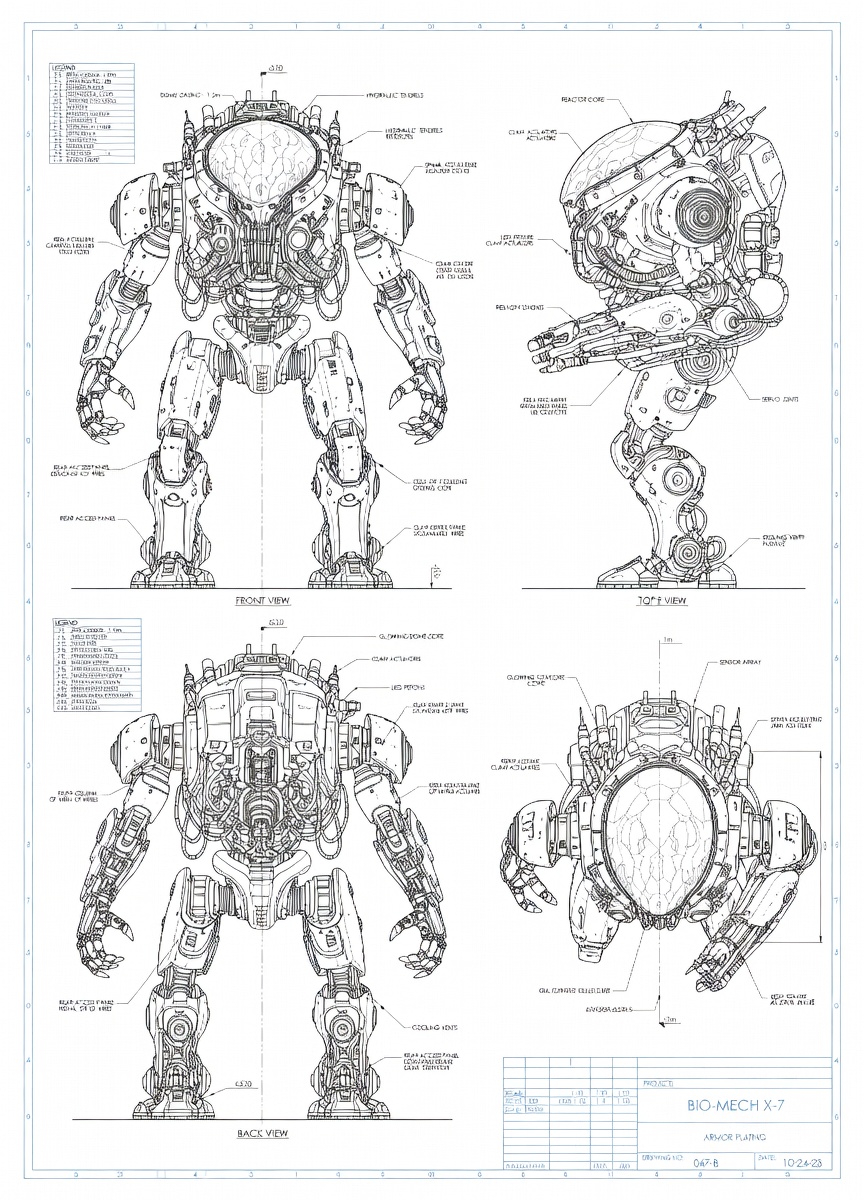
| Vehicle | Tanks, dropships, mechs |
| Capital | Frigates, outposts, mining stations |
| Orbital | Destroyers, cruisers, orbital bombardment platforms |
Units cannot directly attack units more than one tier away. Instead they Suppress — accumulating pressure that pins rather than wounds. Three Suppression Points pin a unit, costing it a Major Action. A Soldier cannot wound a Hovertank with a rifle. They can force it to stop and find cover.
This cross-scale architecture means a campaign can shift from a single character infiltrating a TAM outpost (Personal scale, Ground theater) to the same character’s ship being engaged by a Stellar Concord frigate (Capital scale, Orbital theater) — using the same core resolution mechanics throughout.
The Eryxian Civilizations card set, currently in design, introduces Vehicle and Capital scale cards that are fully compatible with the core rules and expand Chronicle types to include Contested Zone operations and Orbital Insertion scenarios.
The Eryxian Metamorphosis
Eryxia does not merely coexist with the technology its visitors bring. It finishes it.
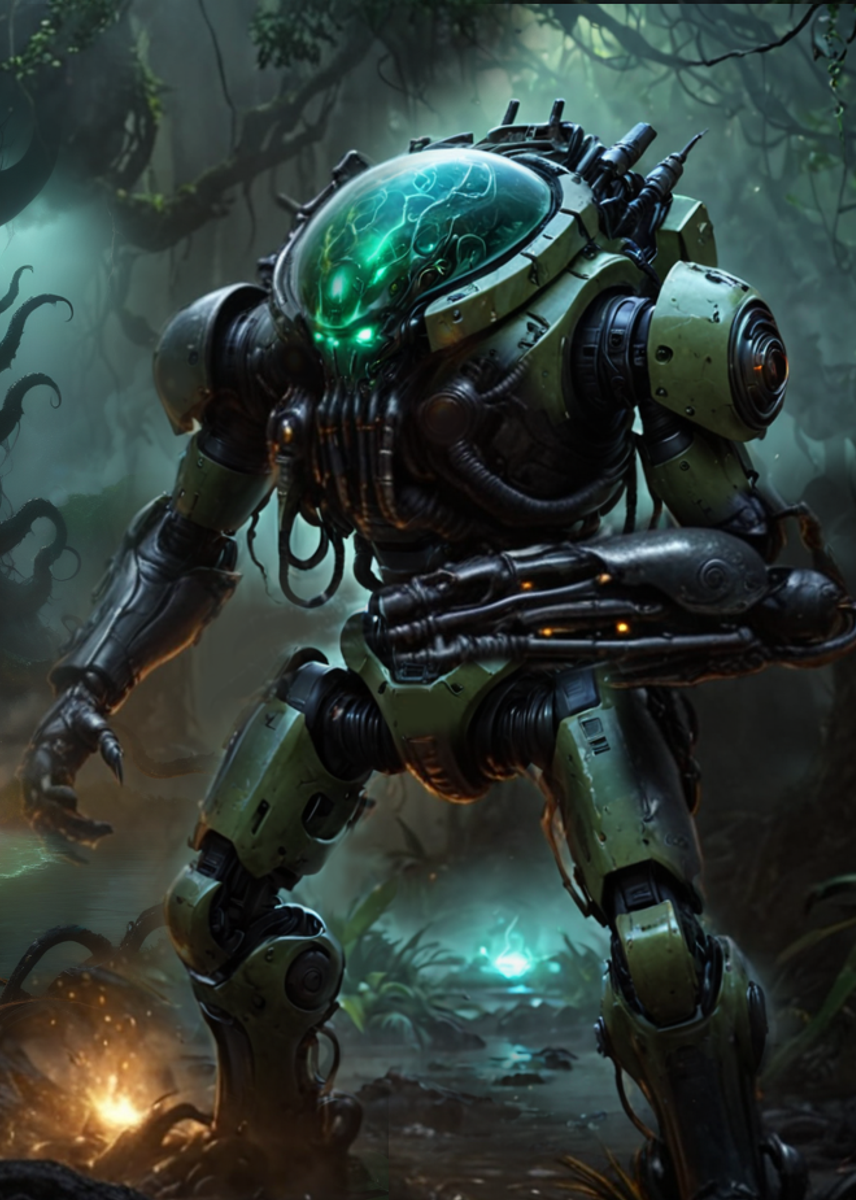
Any asset left unattended on Eryxia — a weapon, a vehicle, a structure, a mind in certain circumstances — has a chance to be appropriated by the ecosystem. Not destroyed. Not consumed. Transformed. The form may be kept while the substance is rewritten. Or the substance kept while the form grows something new around it.
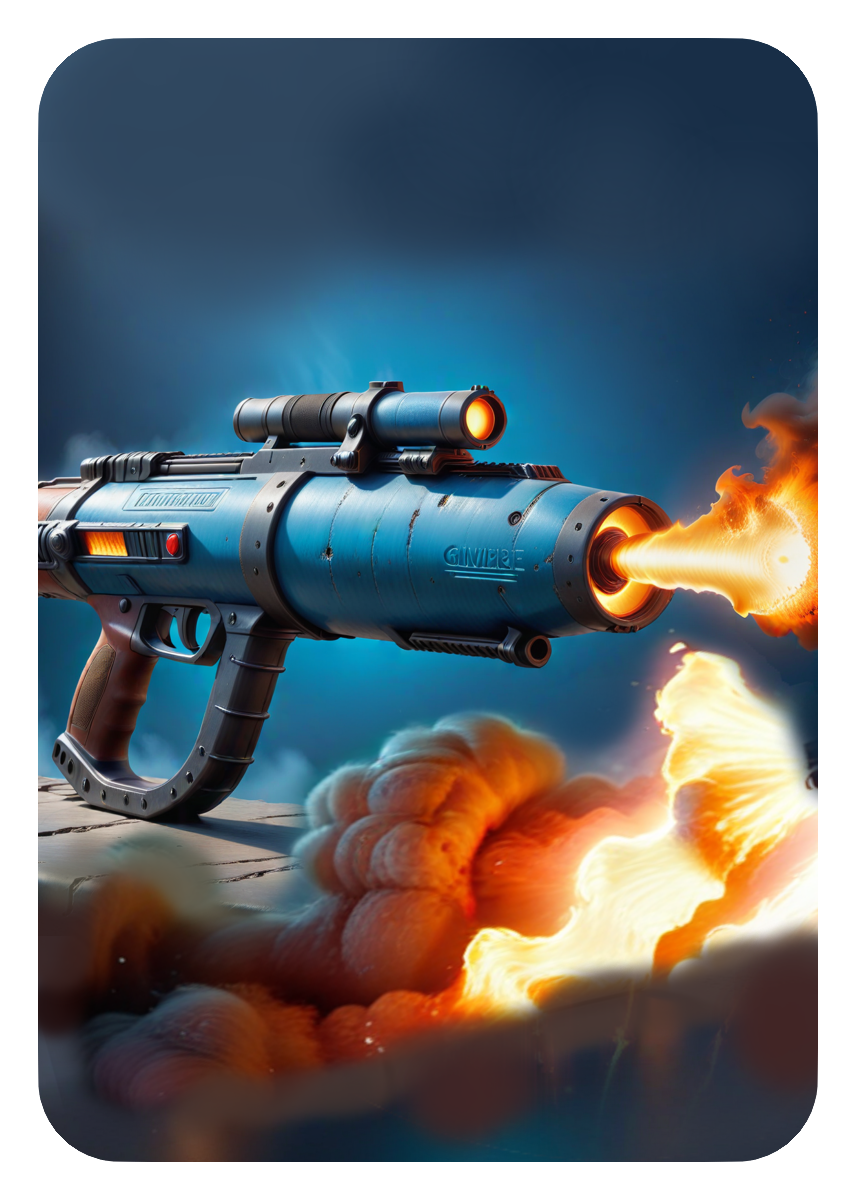
An abandoned gun system melded with the neural plankton becomes a half-sentient entity with instincts. A derelict dropship grown over with Eryxian plankton begins migrating between zones as if it has somewhere to be. The planet is not malicious. It is generative. It finishes what the designers started — only better, stranger, and usually hostile to the original owners.
This mechanic — formalised through the Eryxian Metamorphosis rules and its companion card set, currently in design — gives the planet itself an active role in every campaign. Players who deliberately feed an asset to the ecosystem earn XP and a permanent Metamorphosis QAC. Players who forget to retrieve their equipment find something new waiting at that location next session.
The Collective, for their part, performs their own version: Integration. Where Eryxia rewrites substance while keeping form, the Collective rewrites form while keeping purpose. When both forces act on the same asset, the result is a Chimera — something neither system fully controls, with the combined instincts of both.
The Eryxian Forge App
Eryxian Forge is the companion application for Codex Fantasia (Eryxia), currently in active development. It is not required to play — the game is complete without it. It makes play faster, more accessible, and more connected.
Current features (in active development):
- Psyche Scan — the 12-question character creation flow, generating characters from psychological profile
- Character Sheet — persistent, exportable as JSON, importable by GMs and other players
- Chronicles — playable branching scenarios with Position declarations, dice rolls, and flag tracking
- Campaign View — the Verdant Coast chain with flag-dependent unlocks and cross-session continuity
- GM Tools — Agenda Manager, Flag Ledger, Faction Disposition tracking, Scale Reference matrix
- Codex — lore browser for factions, world entries, rules, and new card sets
Planned features (roadmap):
- Growth tree display and XP path selector
- Forge Card generator (designed crafted items, print-ready)
- Biome and Labyrinth Heart Track management
- Ship Hull Integrity and QAC tracking
- AI narration integration (outcome prose generated from session context)
- Community scenario sharing
The app is built on an open JSON schema — every Chronicle, character, and campaign state is a portable file that can be shared, imported, and archived. When AI narration is integrated, the structured session history is passed directly to the model. The AI only writes prose for what the dice already decided.
What You Need to Play
The system is designed to be picked up and played with minimal components:
- Dice: Six-sided dice, 6–8 per player. Standard, universally available.
- Character sheet: Half a page. Printable from the rulebook or generated by the app.
- Quick Reference card: One page. Covers every mechanical rule you will need mid-session.
- A pencil.
The TCG cards are optional equipment that add significant texture to the experience — as loot, as NPCs, as deployed allies, and as physical records of what the party has found. They are not required to begin.
No miniatures. No battle grid. No proprietary tokens. Suppression Points are tracked with a d6 placed on the NPC card. Conditions are ticked on the character sheet. The card is the miniature, the item card, the NPC, the treasure, and the session memory simultaneously.
The Rulebook
The Codex Fantasia Rulebook is currently in production. It will contain:
- Complete character creation rules including Psyche Scan flow and Quick Build option
- The full Codex Fantasia resolution system (attributes, skills, position, scope, conditions, morale)
- Combat rules with action economy, range bands, and card timing windows
- The Mission and Vow system with all Chronicle types
- Agenda mechanics and Secret Agenda rules
- XP and advancement including the three-tier growth tree
- Crafting rules and the Forge Card system
- NPC creation at all tiers (Grunt, Elite, Boss) with the three-tier defence system
- Ship Hull Integrity and Ship QAC rules
- Labyrinth Heart Track and Sanctum mechanics
- Scale system and cross-scale interaction matrix
- Metamorphosis and Integration rules (Eryxian Civilizations supplement)
- Full Quick Reference card
The rulebook is designed to support play without any other product and to connect meaningfully with every other product in the Eryxian ecosystem. It is not the only way in — but it is the complete way in.
The Ecosystem
Every product in the Eryxian Games line is a complete game and also an element of a larger whole.
The TCG Core Set plays as a standalone card game. The TTRPG rulebook plays as a standalone roleplaying game. When both are present, the cards become loot, the NPCs come with stat blocks, and the Chronicle schema connects sessions across months of play. When fiction is added — short story collections planned to include playable scenarios — the characters from the stories are immediately playable at the TTRPG table.
The Forge Card is the physical object that makes this porous: a blank card in the game’s own frame, included in every product, that players fill in with crafted items, QACs, and custom characters. The card game and the roleplaying game write on the same surface.
Eryxian TTRPG: Codex Fantasia is in active development.
Rulebook: in production.
Eryxian Forge App: in active development.
Eryxian Civilizations: in design.
For lore, card updates, and development news: github.com/eryxgames/Eryxian/wiki
The planet is watching. It has time.